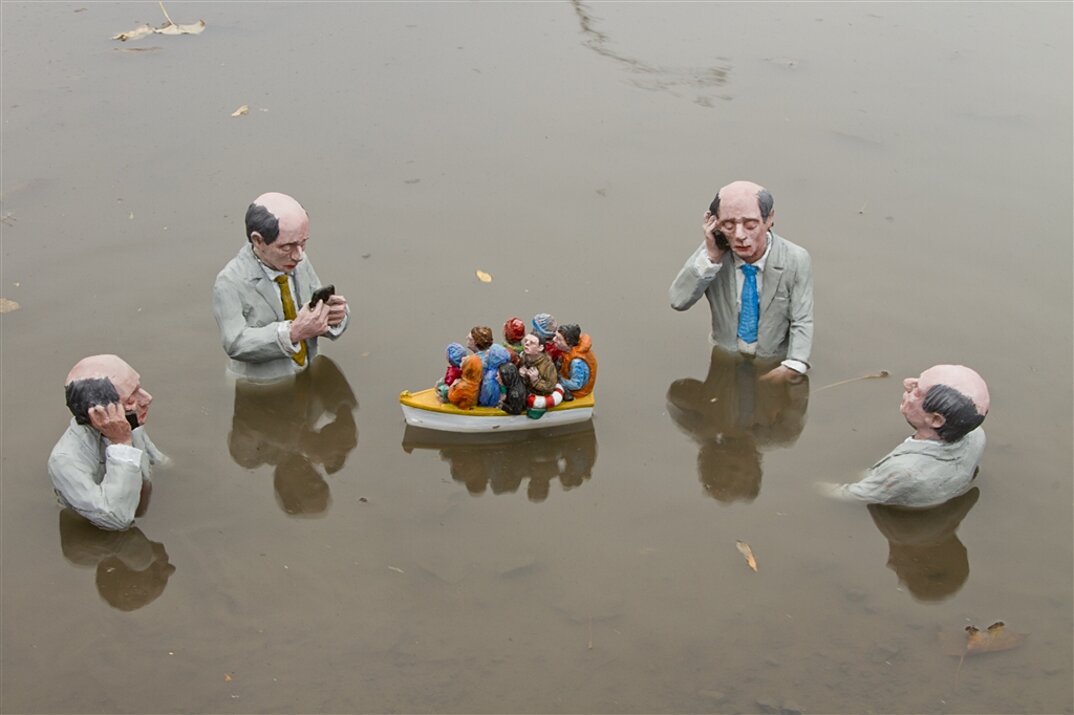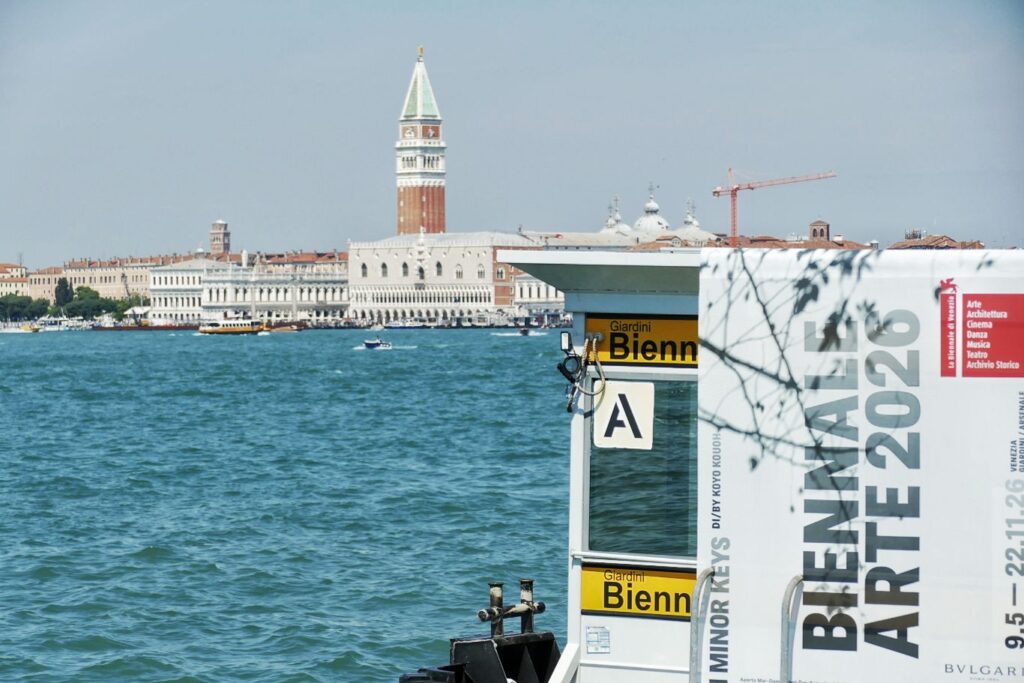
The 61st International Art Exhibition of La Biennale di Venezia, open from May 9 to November 22, 2026, is titled ‘In Minor Keys’, a project by Cameroonian-Swiss curator Koyo Kouoh, who passed away in May 2025, and brought to completion by her curatorial team. The central theme is not explicitly environmental: it speaks of listening, of marginalized knowledge, and of physical, analog aesthetic practices as opposed to digital noise. Yet, digging through the 111 artists in the international exhibition and the nearly one hundred national pavilions, climate change emerges as one of the most recurring threads of this edition.
A theme that doesn’t shout, but it is everywhere
Several analyses indicate that more than twenty national pavilions have placed environmental crises at the heart of their exhibition projects a sign of a now-structural shift in the global art landscape toward ecological themes. Yet, true to the spirit of the Biennale, the climate crisis isn’t presented through proclamations or manifestos: it takes the shape of bodies, waste materials, transforming landscapes, and disappearing species.
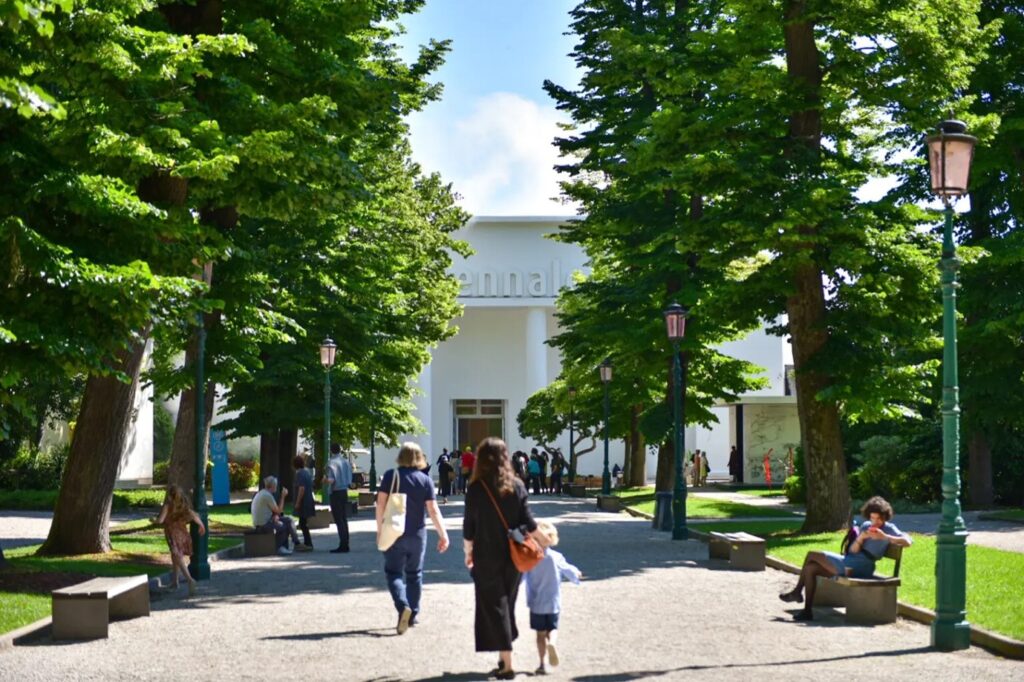
Artworks and pavilions to watch out for
Austria — Florentina Holzinger, ‘Seaworld Venice’ One of the most talked-about pavilions of this edition. The Austrian space becomes a flooded landscape, somewhere between a waterpark, a sanctuary, and a sewage treatment plant. Live performances take place continuously throughout the exhibition: a jet ski circling endlessly as a monument to overtourism, bodies climbing a structure resembling a ship’s mast, a woman living inside a tank with a snorkel, watching the visitors. The most photographed moment features a bell recovered from the lagoon, rung by a performer serving as its clapper: the human body transformed into an alarm for global warming.
Nauru — The debut of a symbolic nation. In its first-ever participation, Nauru — the smallest island nation in the world — brings to the Biennale the story of a territory impoverished by a century of phosphate mining. There is no doom-and-gloom rhetoric: the pavilion reflects a daily, lived condition, making it one of the most direct and effective at explaining climate change, even to a younger audience.
Italian Pavilion — Chiara Camoni, ‘Con te con tutto’ (With You With Everything) Curated by Cecilia Canziani, the Italian project fills the two spaces of the Tese inside the Corderie dell’Arsenale with over twenty human-sized ceramic statues, crafted using clay, shrubs, seashells, stones, and plastic fragments gathered from around the artist’s studio. Several of the sculptures function as plant pots: an intimate sustainability, where plant life and human form coexist within the very same body of work.
Poland — Bogna Burska and Daniel Kotowski, ‘Liquid Tongues’ A video blending Andean and Amazonian knowledge systems with artificial intelligence and 3D modeling, presenting dream and sexuality as ‘sensitive technologies’ through which rainforest communities pass down ecological intelligence and collective care.
New Zealand — Fiona Pardington Seventeen large-format photographic portraits of birds preserved in museum collections across New Zealand and Australia: some extinct for over a century, such as the huia, others endangered. A restrained, quiet ecological grief, fully aligned with the ‘minor keys’ of the entire edition.
At the Arsenale and beyond An olive tree rotating on its own axis becomes, according to several observers, the emblem of a nature uprooted and left without a center.
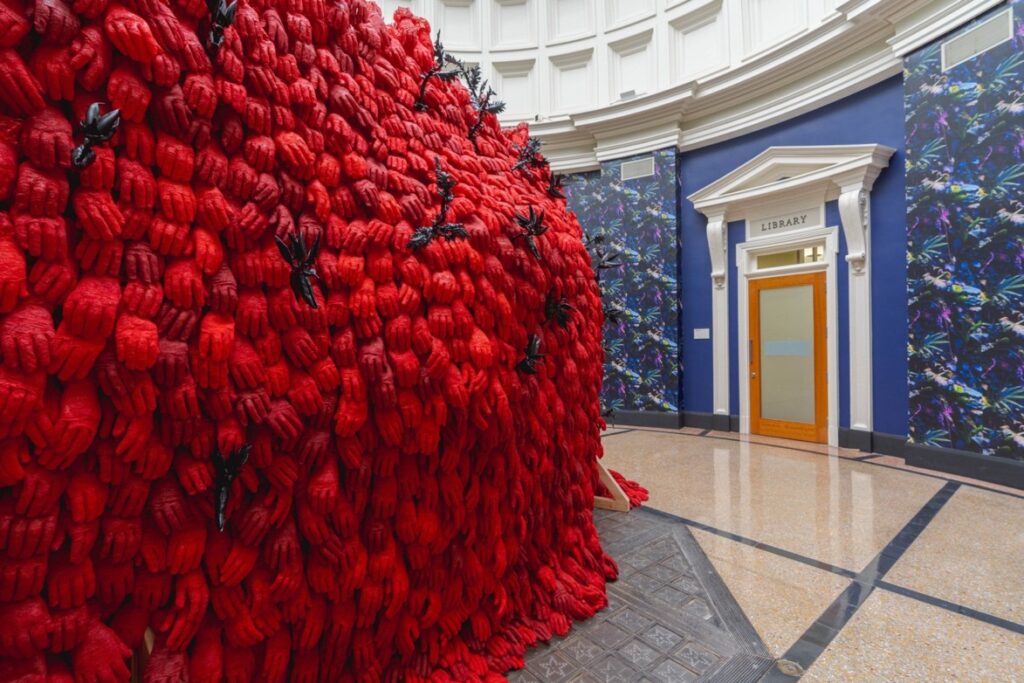
Art that also reduces its own footprint
It is not only the content of the artworks that speaks of the climate: at least one historical pavilion has undergone an energy retrofitting project that brought it from class F to class A3, featuring smart solar shading, double-glazed skylights, and a mandate of restraint that requires the reuse of construction materials and local production, limiting emissions tied to international transport. A sign that contemporary art, to speak credibly about the environmental crisis, is beginning to question its own production processes as well.
Why tone matters, not just the theme
Compared to previous editions, which were more explicitly militant on global warming issues, 2026 chooses a different register: no slogans, but an invitation to slow down one’s gaze and listen to ‘the persistent signals of the earth and of life’, as stated in the curatorial text by Koyo Kouoh. The risk, according to some critics, is that without wall text, many works might remain silent; the virtue, for those who truly stop, is an experience of the climate crisis that is less ideological and more physical, visceral, and hard to forget.
Practical information
- Dates: May 9 – November 22, 2026
- Main Venues: Giardini, Arsenale, and over twenty locations across Venice’s historic center
- Tickets: Available on the official Venice Biennale website (https://www.labiennale.org)
- Tip: Peak months are May–June and September–October; advance online booking is recommended.
Sources: Artribune, Domus, La Biennale di Venezia, Il Giornale d’Italia, DivertiViaggio, Wikipedia (61st International Art Exhibition of Venice, Renata Green).