

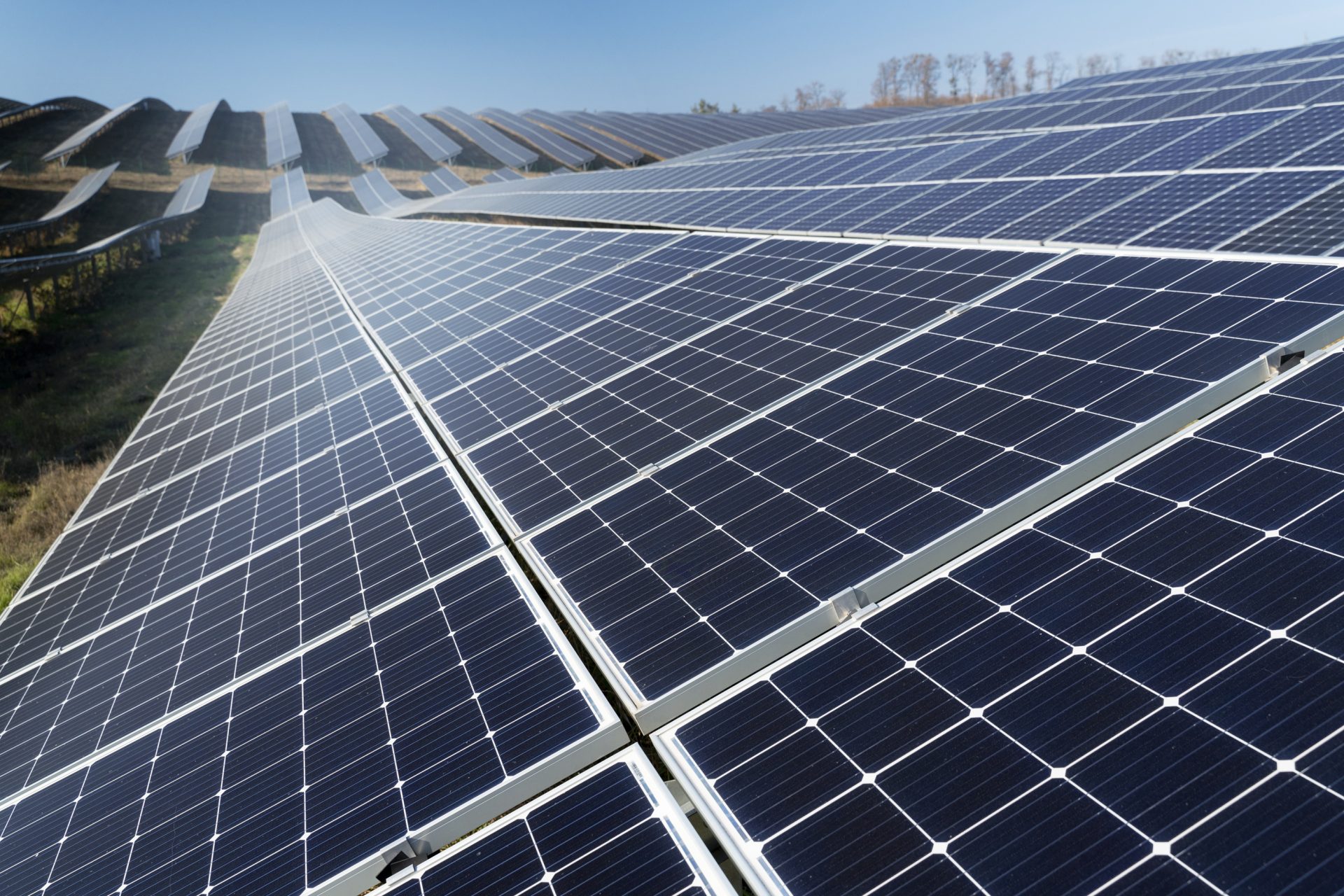
Solar PV: the global landscape in 2026
After years of exponential growth, the global photovoltaic market is entering a phase of consolidation and transformation. According to industry analyses, the growth of annual installations is slowing compared to the past decade, signaling a shift from quantitative expansion to a qualitative selection of projects and technologies.
Key global dynamics for 2026:
- Slowdown in installation growth rates in some major markets, due to changes in incentive policies and competitive auctions (e.g., China and the United States).
- Reduction of production overcapacity and increase in module prices as a result of raw material cost pressures and trade policies.
- However, solar PV remains the key technology for the energy transition, with steady growth prospects at least until 2030 and beyond.
The global market is therefore in a phase of structural maturation: no longer driven solely by volume growth, but increasingly focused on plant quality, integration with storage systems and smart energy management.
Solar PV in Europe in 2026
In Europe, photovoltaic energy continues to play a central role in the decarbonization of the electricity system. Installed solar capacity in the European Union is expected to reach significant levels in 2026, with cumulative capacity forecasts showing strong growth compared to 2025.
Nevertheless, the European market is showing signs of stabilization and selectivity: while installation rates are no longer reaching the record levels of previous years, opportunities are shifting toward:
Integration with storage and demand management: residential PV systems increasingly incorporate batteries and smart management (smart PV + storage), often connected to electric vehicles.
Long-term supply contracts (PPAs) and corporate markets: a growing number of European companies are signing PPAs to secure renewable energy at stable long-term prices, driving commercial-scale projects.
From a regulatory perspective, the European Union continues to advance plans linked to the Green Deal and REPowerEU strategies, supporting renewable expansion and promoting bureaucratic simplification for photovoltaic plant development.
The situation in Italy: growth and new challenges
In Italy, 2025 closed with more than 43.5 GW of installed photovoltaic capacity, including approximately 6.44 GW of new annual connections.
However, compared to the large figures of previous years, this represents a slowdown (-5% YoY), mainly due to contraction in residential and commercial installations.
Key aspects of the Italian market in 2026:
- Growth of large utility-scale plants: while small installations are slowing down, large-scale projects are recording significant increases, reflecting the impact of FER-X auctions and previously granted authorizations.
- Expansion of agrivoltaics: integrated projects combining energy production with agricultural activities are becoming increasingly relevant, supported by dedicated tenders and incentives (see also the Agrisolar Park Call 2026).
- Incentives and tax deductions for self-consumption: measures supporting residential and corporate photovoltaic systems (tax bonuses and deductions) will continue to sustain the market.
Despite territorial slowdowns, Italy remains one of the most important markets in Europe thanks to favorable solar radiation, growing renewable energy demand and ongoing regulatory efforts.
Technological trends in solar PV in 2026
The sector is not driven only by installed capacity: 2026 is expected to be a year of strong technological innovation.
1. Improvements in photovoltaic modules
The most evident progress concerns:
- High-efficiency modules: silicon modules exceeding 23% efficiency, bifacial panels and TOPCon/HJT technologies to maximize energy output.
- Aesthetics and design: increasingly widespread “full black” panels for architectural integration in urban and residential contexts.
- Price stability and supply chain: after years of declining prices, 2026 is expected to bring stabilization or a slight increase in module prices in response to global market dynamics.
2. Advanced PV: perovskites and tandem technologies
Among the most anticipated innovations:
- Perovskite-silicon tandem technologies: capable of surpassing the efficiency limits of traditional modules, with potential yields above 30%, progressively approaching industrial-scale commercialization during 2026.
- Reduction of critical materials: research focused on reducing the use of costly materials such as silver, introducing more sustainable alternatives.
These innovations represent a potential technological leap that could redefine panel efficiency and PV competitiveness across residential, commercial and utility segments.
3. Intelligent systems and energy integration
The European market is seeing growing demand for “smart” photovoltaic systems, including:
- Integrated energy storage solutions (batteries)
- Dynamic consumption management through IoT and AI systems
- Integration with electric vehicles and smart grids
This evolution enables maximization of self-consumption and more efficient synchronization between production and demand, particularly in residential and commercial contexts.
Outlook for Italy and Europe in 2026 and beyond
Looking ahead to 2026 and the following years, solar PV in Italy and Europe is entering a phase of full industrial maturity, where growth will no longer be driven exclusively by installation increases, but by project quality, technological integration and the energy system’s capacity to absorb and manage renewable production.
At the European level, community policies will continue to support solar energy as a pillar of the energy transition. The regulatory framework outlined by the Green Deal and the Fit for 55 and REPowerEU packages pushes toward structural decarbonization, with increasingly stringent emission targets and a progressive reduction of dependence on fossil fuels. In this context, solar PV is no longer merely an incentivized technology, but an economically competitive solution capable of attracting private investment and institutional capital.
However, the real test will be grid management. As the share of solar energy in the energy mix increases, challenges related to grid flexibility, balancing production and consumption, and the need for adequate infrastructure will become more evident. For this reason, in the coming years there will be growing importance of:
- large-scale and distributed storage systems,
- smart grids,
- demand response tools and digital energy flow management.
In Italy, these dynamics will be even more pronounced. The country presents particularly favorable conditions for photovoltaics – high solar irradiation, wide availability of industrial and agricultural surfaces, strong energy demand – but must address structural challenges such as authorization complexity and slow bureaucratic procedures. In the medium term, the ability to simplify processes, accelerate grid connections and ensure regulatory predictability will be decisive in sustaining sector growth.
At the same time, alternative development models will strengthen, such as:
- large utility-scale plants, often supported by long-term PPAs,
- advanced agrivoltaics, combining energy production with agricultural activities,
- collective self-consumption and energy communities, destined to become key elements especially in urban and industrial contexts.
In the post-2026 period, solar PV will increasingly integrate with other sectors: electric mobility, sustainable construction, energy-intensive industry and storage systems. Solar technology will definitively cease to be perceived as an “add-on” solution and will become a core energy infrastructure, central to economic competitiveness and European energy security.
2026 therefore appears as a turning point in the photovoltaic pathway: less quantitative boom, more quality, innovation and sustainability. The European and Italian energy transition increasingly relies on a mix of public policies, private market forces, advanced technologies and smart energy management approaches.
In view of the event KEY – The Energy Transition Expo in Rimini, these trends represent a detailed snapshot of the sector: a mature, challenging yet opportunity-rich market, featuring cutting-edge technologies and an increasingly central role in the European energy system.