

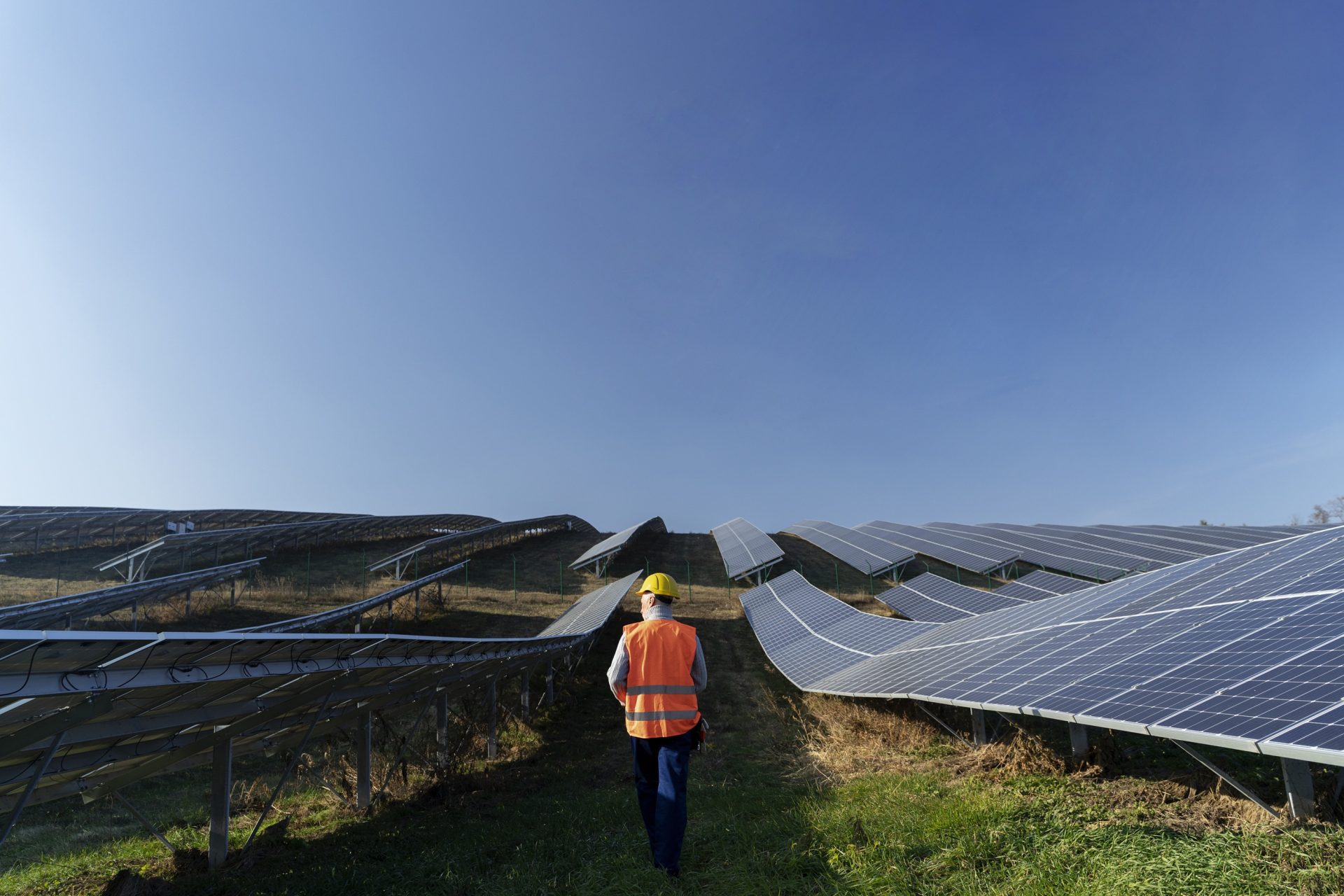
Since last spring, many photovoltaic industry operators have been confronted with an unexpected event: plants being remotely shut down in the middle of peak production hours. Not because of a fault, and not due to a technical issue. A disconnection command issued by the grid.
This is the tangible effect of ARERA Resolution 23/2026/E/eel, which came into force on March 16. To understand what is happening—and what awaits us during the summer months—it is useful to take a step back.
What is the RiGeDi procedure?
RiGeDi (Reduction of Distributed Generation) is the procedure through which Terna, acting via distribution system operators, can order the remote disconnection of distributed generation plants when electricity production exceeds the grid’s capacity to absorb it. Through this mechanism, Terna can implement extraordinary downward modulation actions by remotely disconnecting distributed generation facilities, thereby ensuring the security and stability of the national electricity system.
The mechanism itself is not entirely new. Annex A.72 of the Grid Code applies to photovoltaic and wind power plants with a total nominal capacity of 100 kW or more connected to medium-voltage distribution networks. What has changed with the February resolution is the rigor with which the procedure is enforced, as well as the economic consequences for operators who have failed to comply with the requirements.
The New Development in Resolution 23/2026: From a Technical Requirement to Economic Enforcement
Until March, many plants were formally equipped for remote disconnection but were not actually operational: non-communicating modems, commands that could not be executed, and failed testing procedures. This was a widespread situation and, for the most part, tolerated. With Resolution 23/2026, ARERA introduced economic enforcement mechanisms for plants that fail to comply with remote disconnection requirements. Remote disconnection is no longer merely a technical requirement to be declared; it is now an operational obligation with direct economic consequences.
The consequences are specific and already in effect. As of March 16, 2026, remuneration for electricity fed into the grid is suspended for non-compliant plants until the required upgrades have been completed. The measure also applies to plants operating under active agreements with the GSE, for which the payment of the amounts due is temporarily suspended until compliance is achieved.
By March 15, 2026, e-Distribuzione submitted to Terna and GSE the list of producers whose modems either do not communicate with the RiGeDi remote-disconnection system or, despite communicating correctly, fail to execute disconnection commands during the required testing procedures. For these plants, the suspension of revenue payments has now been in effect for three months.
Why summer is the most critical time
In the first two months of 2026, Italy’s photovoltaic generation increased by 21% compared with the same period in 2025. As June and July—the peak weeks of solar generation—approach, situations of overgeneration within the distribution network become structurally more frequent and more severe.
Italy’s electricity grid was designed to distribute power, not to manage large-scale bidirectional flows across a highly distributed generation network. Remote disconnection is the tool the system uses to protect itself when local generation exceeds the grid’s capacity to absorb and transport the excess energy. During the summer months, this mechanism is used far more frequently than at any other time of the year. Operators who have not yet regularized their compliance status will face more frequent disconnection events, as well as a continued suspension of revenue payments.
The structural context is well described in SolarPower Europe’s EU Solar Market Outlook 2025–2030: the lack of system flexibility, storage, demand response, and grid digitalization are currently the main impediments to the growth of European photovoltaics. Remote disconnection is, in this sense, an emergency measure that makes up for still-insufficient structural solutions. It works, but the operating costs fall directly on non-compliant operators.
The implications for portfolio managers
For those who manage multiple plants, this introduces a new variable in asset control: it’s not enough to know that a plant is producing. It’s necessary to know whether it has received disconnection commands, how long it has been inactive at the grid’s behest, and whether that inactivity has been correctly recorded for the purposes of reporting incentives and sales revenues.
A plant disconnected at Terna’s behest is not a faulty plant. However, if the production data is not reconciled with the disconnection event, the risk is a silent discrepancy between expected and actual production, with direct implications for incentive control, trader invoice verification, and PPA contract management.
What to do now
Per chi ha impianti ancora non conformi, il tempo utile per intervenire prima del picco estivo si sta esaurendo. Le azioni prioritarie sono verificare lo stato del modem di teledistacco, riscontrare l’esito delle prove effettuate dal distributore e, se il blocco dei ricavi è già scattato, attivarsi per ottenere la riattivazione delle partite economiche sospese presso il GSE.
For those already compliant, the focus shifts to monitoring: distinguishing periods of ordered disconnection from those of actual underproduction, tracking the frequency and duration of disconnections, and verifying that the production data transmitted to the GSE accurately reflects the plant’s operational reality.
Italian photovoltaic production is more than ever. The grid is learning to manage it. The misalignment between the two processes, for now, is being passed on to those who have not yet come to terms with this new normal.
Sources: ARERA, Resolution 23/2026/E/eel; e-Distribuzione; QualEnergia.it; Terna, Grid Code – Annex A.72.