

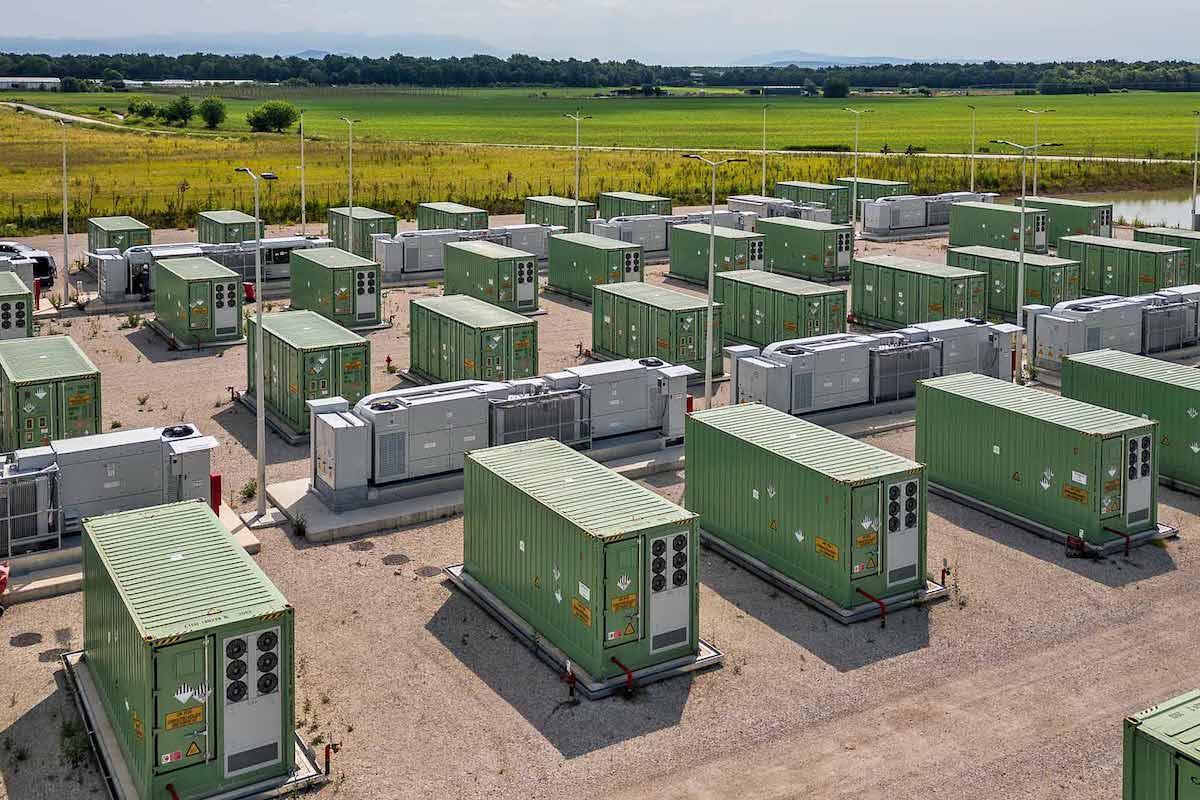
The growth of renewable energy sources is changing the way energy is produced and used. Solar and wind power help reduce dependence on fossil fuels, but they have one characteristic that makes electricity grid management more complex: their output is variable and depends on weather conditions.
For example, solar panels generate most of their electricity during the middle of the day, while a company’s energy consumption may be concentrated at different times. It is therefore necessary to find systems capable of storing energy when it is available and making it usable when needed.
In this context, BESS (Battery Energy Storage Systems), which store electrical energy in batteries, are becoming increasingly important. These solutions can help manage renewable energy generation more effectively, optimise energy consumption and increase the flexibility of energy systems.
What is a BESS and how does it work?
A BESS is an integrated system that enables electrical energy to be stored and released at a later time, according to the needs of the facility or the power grid.
The energy can come from the electricity grid or from a generation system, such as a solar photovoltaic installation. During charging, the energy is converted and stored in the batteries. When it is needed, the system makes it available again in the form of electrical energy.
A BESS is therefore more than just a battery pack. It consists of several components that work together to manage energy storage, power conversion and the safety of the entire system.
The main components include:
- Battery System: comprises the cells, modules and racks that make up the energy storage system;
- Battery Management System (BMS): monitors parameters such as state of charge, temperature, voltage and current, helping keep the batteries within safe operating limits;
- Power Conversion System (PCS): converts energy between direct current (DC), used by the batteries, and alternating current (AC), used by the grid and electrical installations;
- Energy Management System (EMS): coordinates system operation and determines when to charge or discharge the batteries based on the available data;
- Auxiliary systems: include, among other components, cooling, air conditioning and fire protection systems, which are essential for the proper operation of the installation.
Together, these components enable a BESS to become an integral part of the energy infrastructure rather than being viewed simply as an energy storage system.
Where are BESS Used?
Energy storage systems can be used in a variety of settings, ranging from large-scale energy infrastructure to industrial facilities.
In utility-scale applications, BESS are connected to the power grid and can help balance electricity supply and demand, manage energy generated from renewable sources and provide flexibility services to the grid.
A second key application area is Commercial & Industrial (C&I), where the system is installed to serve a business or industrial facility. In this case, energy storage can be integrated with solar photovoltaic installations and other on-site energy generation or consumption systems.
BESS are also used in microgrids and Renewable Energy Communities (RECs), where energy storage can help better align electricity generation with consumption and increase the share of available energy that is used locally.
What benefits can a BESS offer businesses?
For a business, the value of an energy storage system goes beyond simply storing electricity. A BESS can become a valuable tool for managing energy consumption and generation more flexibly.
Peak Shaving
One of the most common applications is peak shaving, which involves reducing peak power demand from the grid.
When electricity demand is high, a BESS can supply part of the required energy, reducing the amount of power drawn from the grid at that particular time. The feasibility of achieving this result and the associated financial benefits depend on the company’s consumption profile, system configuration and electricity supply terms.
Maximising Self-Consumption
When a business has a solar photovoltaic installation, electricity generation does not always coincide with the time when energy is consumed.
Energy storage makes it possible to store some of the electricity generated but not immediately used, making it available later, for example during the evening or at other times of higher demand.
In this way, a BESS can help improve the alignment between energy generation and consumption while reducing reliance on electricity purchased from the grid.
Energy Cost Management
An energy storage system can also be used to manage electricity according to price fluctuations and consumption patterns.
When market conditions make it economically advantageous, the system can be programmed to store energy and use it at a later time. The actual benefits depend on price trends, system costs and how the BESS is operated.
Flexibility and Operational Continuity
A properly designed BESS can also help improve the resilience of a company’s electrical infrastructure. Depending on its configuration, it can respond to certain grid disturbances and, in systems designed for islanded operation, help maintain power supply to selected loads.
Here too, performance depends on the system’s technical specifications and the electrical architecture of the installation.
The role of EMS and Intelligent Energy Management
The value a BESS can deliver depends on more than just battery capacity. Intelligent energy management also plays a key role.
The Energy Management System (EMS) collects and analyses data relating to energy consumption, battery status and, where applicable, electricity market conditions.
This information can be used to schedule charging and discharging cycles in line with the installation’s objectives.
Advanced energy management can also integrate data from monitoring and control systems, as well as information on energy consumption. The aim is to make use of available storage capacity at the most advantageous time, avoiding unnecessary cycles and helping preserve battery performance over time.
Digitalisation therefore becomes an essential component of the system: batteries, power electronics and software must work together to maximise the value of the energy storage infrastructure.
BESS and the energy transition
The integration of renewable energy sources requires an enhanced capacity to manage production variability and align supply with consumption. In this context, Battery Energy Storage Systems (BESS) serve as a key tool for increasing the flexibility of the electrical grid.
For businesses, energy storage should not be viewed as an isolated component, but rather as part of a broader strategy that encompasses renewable energy generation, consumption management, digitalization, and energy control.
The value of a BESS therefore depends on how it is sized and integrated into the energy system. There is no “one-size-fits-all” configuration; factors such as facility characteristics, consumption profiles, renewable generation, grid conditions, and operational strategies must all be taken into account to identify the most suitable solution.
From this perspective, Battery Energy Storage Systems represent an increasingly important technology for supporting the transition toward an energy system that is more flexible, efficient, and capable of integrating a growing share of energy from renewable sources.
BESS and asset management: the role of Raptech
When energy storage systems are added to solar photovoltaic installations, the amount of data that needs to be monitored quickly increases. Raptech is extending R-Cloud, its asset management platform, to BESS. The platform currently monitors more than 5 GW of renewable energy installations for some of Italy’s leading operators and international players.
Many of these operators are already adding batteries to their portfolios and want to monitor them alongside their existing installations, within the same environment and using the same reporting tools they rely on for investors and lenders.
Together with clients whose energy storage systems are already operational, we are defining the KPIs to be monitored. Operators managing mixed portfolios need to know whether their storage systems are performing in line with business plan expectations—and to identify deviations in time to take corrective action.
(picture from rinnovabili.it)