

asset management Tag

With extensive international experience as an asset manager and now co-founder of TAKUU CONSULTING, Giorgio Bonamini answers our questions about the present and future of the photovoltaic market.


Giorgio, after a long experience in the renewable energy sector, you decided to start your own consulting firm. What was the spark that drove you to take this step?

After nearly ten years in the renewable energy sector, I have developed a deep understanding of the management and optimization of photovoltaic assets. The decision to found TAKUU CONSULTING stemmed from the desire to offer a highly specialized service, capable of responding to evolving market needs. Together with Alejandro Invernon Iglesias, co-founder of TAKUU, we recognized that the sector was reaching a stage of maturity, where professional management of existing and future assets is essential to ensuring performance and value over time. Our many years of experience allow us to offer innovative and customized solutions for every client.


What is the mission of your new company and which market players does it mainly address?

TAKUU CONSULTING’s mission is to maximize the value of our clients’ renewable assets, managing them with the same care, responsibility, and strategic vision we would dedicate to our own plants. We offer transparent and independent asset management services, integrating technical, financial, and operational expertise to optimize performance, costs, and processes throughout the plant’s lifecycle.

We primarily serve institutional investors, IPPs, and investment funds, supporting their internal asset management teams with flexible and scalable solutions, both during ordinary management phases and in the context of extraordinary transactions or portfolio consolidation. We also work alongside owner communities and local consortia, offering professional tools to enhance plant value, simplify governance, and improve long-term profitability.


Asset management in the photovoltaic sector is a strategic area, yet often undervalued. What does the added value of proper asset management actually translate into?

Professional photovoltaic asset management maximizes plant profitability by ensuring control over O&M operations, aligning revenues with actual production, and optimizing costs through supplier synergies. Furthermore, active management of PPAs and storage systems mitigates market risks and maximizes asset value even in complex scenarios. A strategic approach to asset management translates into greater efficiency, reliability, and economic sustainability of photovoltaic plants.


You have had direct experience in several European markets: what, in your opinion, are the main differences between Italy and Spain in terms of their approach to photovoltaics and the maturity of the operators?

Over the years, I have worked extensively in both markets, allowing me to observe firsthand how Italy and Spain have developed and consolidated their position in the photovoltaic sector. While both countries are clearly committed to the energy transition, their approaches are different, both regulatoryly and operationally.

In the case of Spain, growth has been very rapid in recent years. The expansion of installed capacity—over 35 GW through 2024—and the proliferation of PPAs with large companies like Amazon are evidence of this. This dynamic has been made possible by the presence of utilities with strong execution capacity. I have also seen how the abolition of the “sol tax” in 2018 represented a major turning point, and how many processes have since been streamlined. However, challenges remain: the regulatory framework is advancing, but there are significant delays in storage permits and grid adaptation, especially for large-scale projects. The recent Royal Decree 7/2025 seeks to correct this situation, but its implementation is still too recent to assess its results.

On the other hand, Italy has a more consolidated path. The experience gained during the Conto Energia period is reflected in operators with a strong technical culture and a rigorous approach to regulatory management. However, I have observed that the development of new projects is faced with more complex authorization processes, primarily due to the lack of harmonization between the state and regional levels, and landscape restrictions in some areas.

In short, these are two markets with complementary strengths: one more institutional and technical, the other more dynamic and scale-oriented. Having worked in both allows me to understand these differences and apply the best of each approach in the solutions we offer at TAKUU.


In Italy, there’s growing talk of repowering and revamping. Is this really the new frontier, or are we underestimating other emerging assets or dynamics?

Repowering and revamping are essential today to leverage existing assets, but the real frontier lies in the development of hybrid systems, integrating photovoltaic, wind, and energy storage systems (BESS). Market evolution, with increasing curtailment and the growing share of renewables, requires cross-functional skills and advanced management of new revenue stacking models. TAKUU CONSULTING supports clients in this transition, offering tailored technical and strategic advice.


How do you see the role of technical and strategic consulting in photovoltaics evolving over the next five years? Will there be more room for independent, specialized operators like you?

Over the next five years, technical and strategic consulting in the photovoltaic sector will be increasingly in demand, especially for the management of PPAs and storage systems. The growth of renewable assets and the complexity of new business models will make it essential to rely on independent and highly specialized partners like TAKUU CONSULTING, capable of offering customized, flexible, and, above all, rapid solutions.


What advice would you give to a young professional who wants to enter the world of photovoltaics and asset management today?

Photovoltaics is a rapidly expanding sector, offering many real opportunities for those who are eager to learn. My advice is to build cross-disciplinary skills: thoroughly understand both the technical and economic-financial aspects. Asset management, in particular, gives you a comprehensive view of how a system actually works and what it takes to make it profitable over time. It’s a dynamic, concrete field, where you work on real problems and where you can grow quickly, especially if you have a practical, results-oriented approach.
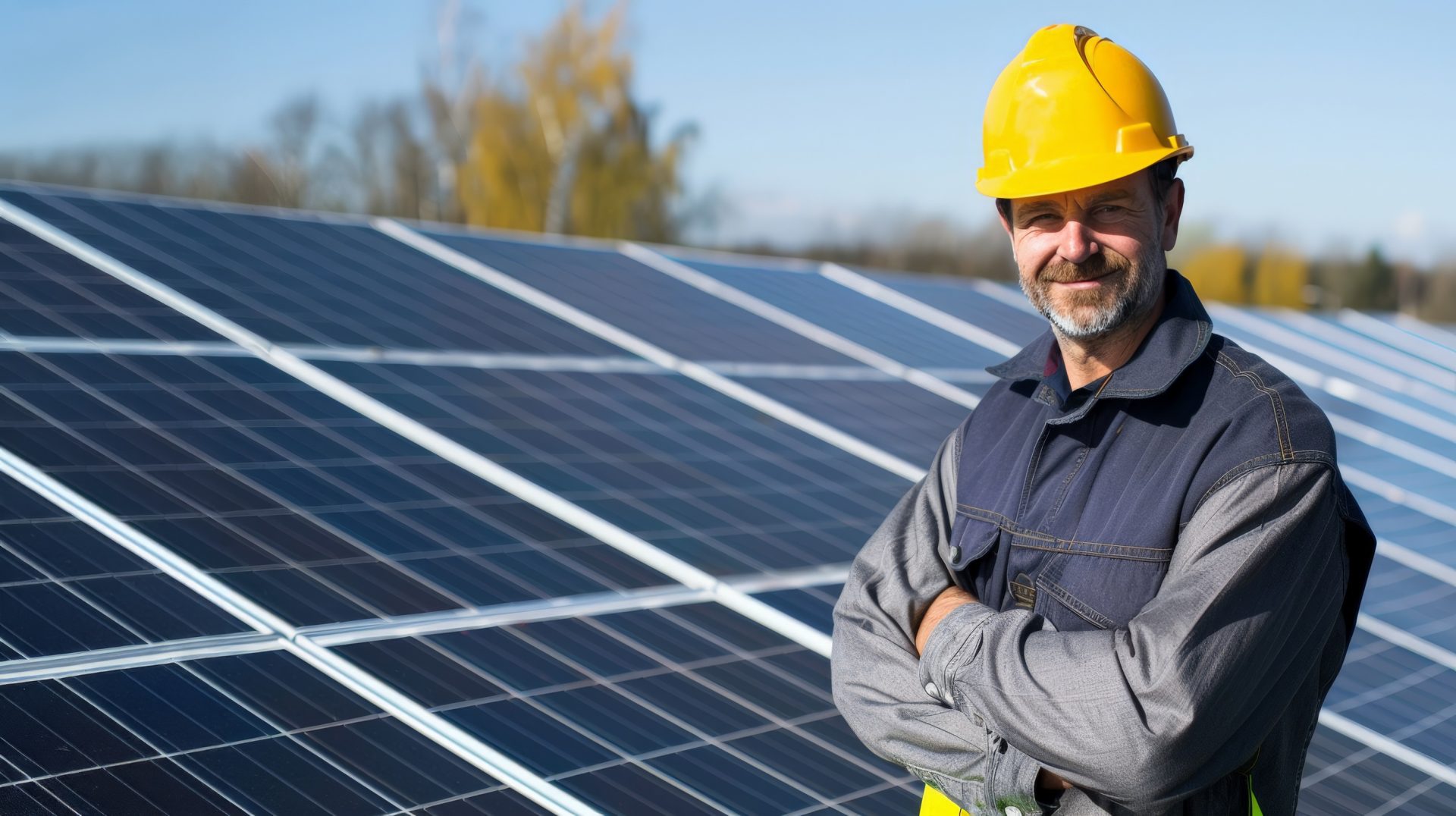
The large-scale adoption of renewable energy is essential to address challenges such as climate change and energy security.

Technological innovation is revolutionizing the renewable energy sector, improving efficiency and reducing costs. Technologies such as high-efficiency photovoltaic panels, smart wind turbines and organic photovoltaic cells are maximizing energy production and minimizing consumption.

Digitalization and automation, supported by the Internet of Things (IoT) and artificial intelligence, allow for the optimization of energy plant management, reducing downtime and improving maintenance. The use of drones for energy infrastructure inspection represents a further step towards safer and more efficient operations.

The implementation of cutting-edge management and control systems allows for monitoring the production and efficiency of renewable sources, optimizing performance and reducing waste.

The sale of renewable energy is supported by digital platforms and innovative applications that facilitate market access and knowledge.

Among the most interesting prospects are the integration of advanced storage systems to optimize energy use, the development of smart grids for more efficient distribution and the continuous search for innovative solutions to overcome the challenges related to the transition to a low-carbon economy.

According to recent industry studies (source: “Italy for Climate” Survey, 2023), the adoption of innovative technologies in the field of renewable energy has contributed to an annual growth of the market of 20% in the last five years. This positive trend has been driven by the increasing efficiency of production technologies, the reduction of operating costs and the greater awareness of the importance of clean energy for environmental sustainability.


The collaboration between EF Solare Italia / Raptech

An interesting example of the support offered by technology to the growth of the renewable energy market is represented by the collaboration between Raptech and EF Solare Italia, a leading photovoltaic operator in Europe, 70% owned by the funds of F2i – Fondi Italiani per le Infrastrutture, the largest infrastructure fund active in Italy, and 30% by Crédit Agricole Assurances, the leading French institutional investor in renewable energy.

Raptech is a company that has been active in the renewable energy sector for over 15 years, specializing in monitoring and asset management solutions for photovoltaic plants. Raptech offers management tools based on proprietary platforms such as R-Cloud, which help maximize operational efficiency in the renewable energy sector.

The EF Solare Italia Group, with more than 300 plants and an installed capacity of over 1 GW between Italy and Spain, is one of the leading photovoltaic operators in Europe. It is positioned as an industrial and technological leader in the sector and is an active protagonist of the national and European energy transition process through operational excellence, innovation, the development of new plants and the valorization of its assets.

EF Solare Italia has also been actively operating in the agrivoltaic sector for over 10 years, thanks to the 32 MW of photovoltaic greenhouses and the development of an innovative advanced agrivoltaic model with zero land consumption. As an Italian pioneer of agrivoltaics, EF Solare Italia is a partner in the European research project “Symbiosyst” which, selected and financed by Horizon Europe, aims to design and develop scalable models to increase the competitiveness of the sector in Europe.

The Group, a member of the main trade associations, is also constantly engaged in research and development activities for the design of technical and management solutions aimed at the optimization, innovation and industrialization of the sector both in Italy and in Spain, where EF Solare Italia is present through its subsidiary Renovalia.

EF Solare Italia uses Raptech systems to support the operations of the Operations (Monitoring & Performance) and Energy Management areas. The Raptech system has allowed a smooth integration with the business processes of EF Solare Italia. This feature is crucial to guarantee a continuous flow of data between the various departments, improving internal communication and supporting more informed business decisions.

Thanks to these features, EF Solare Italia not only optimizes the management of photovoltaic systems, but can also guarantee an improvement in the quality of the data collected and greater efficiency and simplification of business processes. In a constantly evolving sector such as that of renewable energy, the adoption of these advanced technologies is combined with the goal of EF Solare Italia to maintain a leadership position and ensure sustainable growth.


The EF Solare Italia/ Raptech Case Study: Monitoring & Performance

One of the main challenges of EF Solare Italia is the need to monitor the performance of its photovoltaic systems.

Monitoring and control are essential to ensure optimal efficiency and maximize performance over time. Integrated sensors are essential tools to constantly verify the correct functioning of the system. Thanks to the data collected, it is possible to monitor the progress of energy production and intervene promptly in the event of anomalies.

The lack of an effective monitoring system can lead to significant problems. Without constant control, any malfunctions or failures could go unnoticed, compromising the overall performance of the system and generating additional costs for corrective maintenance.

EF Solare Italia, a leader in the management of photovoltaic systems, has integrated the R-Cloud meter reading system, developed by Raptech, into its processes, taking full advantage of its advanced features. This system allows the automatic and constant reading of energy production meters, comparing the data collected with those of the Distributor. This synchronization ensures accuracy and prevents any reading errors that could compromise the revenue streams from incentives and the sale of the energy produced.

Data quality is a central element of R-Cloud thanks to energy validation tools, selection of irradiation data from different sources and subsequent validation of unique and verified KPIs (Key Performance Indicators). One of the most used aspects of the system, in fact, is its automated reporting, which provides a detailed overview of the performance of the systems. These reports are essential to quickly identify any discrepancies or malfunctions, allowing timely interventions that minimize downtime and maximize energy production.

The presence of a control system is essential to be able to proceed with a fundamental pillar in the optimal management of photovoltaic systems: preventive maintenance. This practice offers, in fact, a series of significant advantages that contribute to the duration and efficiency of the system.

One of the main benefits of preventive maintenance is the ability to promptly identify and resolve any anomalies or problems, thus reducing the risk of sudden failures and minimizing system downtime. This translates into continuous energy production and a reduction in long-term management costs.

Correct planning and management of photovoltaic system maintenance requires the development of a detailed maintenance plan that includes the activities to be carried out, the intervention times and the necessary resources. Constantly monitoring the status of the system, using data from photovoltaic system monitoring, allows targeted preventive measures to be adopted and prompt intervention in the event of anomalies, thus ensuring maximum efficiency and durability of the system over time.


The EF Solare Italia / Raptech case study: Energy Management

Managing a photovoltaic system requires specific skills and a holistic approach that goes beyond simple installation and energy production. Through constant monitoring of production data, it is possible to identify any anomalies or malfunctions that could compromise the performance of the system.

The use of advanced software and analysis tools allows for optimizing the management of production and also revenues (incentives and sales of electricity and Guarantees of Origin). Correct management of financial resources is, in fact, another key aspect. Carefully monitoring revenues in relation to the performance of the system is a fundamental activity to ensure the correct valorization of the energy produced.

From this perspective, the automation of the control of electricity sales invoices to market operators and incentives received from the GSE is a central element. This challenge, closely linked to the minimization of errors in remote meter reading, is crucial for the correct monitoring of cash flows.

In particular, the Energy management area of ​​EF Solare Italia uses the R-Cloud section dedicated to monitoring revenues from the GSE Conto Energia agreement. The platform also allows you to effectively manage the billing relating to PPA (Power Purchase Agreement) contracts for the sale of energy produced by photovoltaic systems and Guarantees of Origin. This is possible thanks to the automatic control of the amounts based on the real and estimated load profiles, which Raptech allows you to access quickly and automatically through the TSO, DSO and GSE portals. Finally, R-Cloud allows you to quickly verify the correct application of the contractual conditions for the sale of energy, allowing you to distinguish between fixed-price sales contracts and variable-price market contracts.