

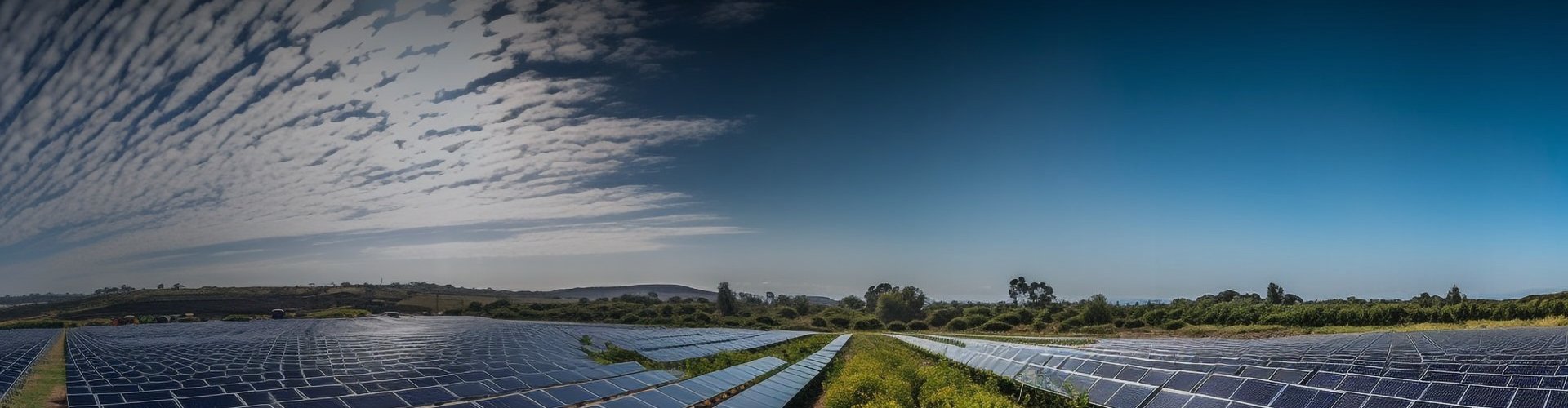

Solar Quality Summit Europe 2024
The Solar Quality Summit Europe 2024, held in Barcelona on 23 and 24 January, highlighted the importance of an integrated approach to quality in the life cycle of photovoltaic projects. With rapid growth in the sector, the summit highlighted the importance of a sustainable photovoltaic industry.
Current Photovoltaic Landscape in the EU
The photovoltaic sector in Europe has set a new record, recording an increase of 40% compared to the previous year. New photovoltaic capacity reached 55.9 GW, raising the total from 207 GW in 2022 to 263 GW in 2023. Growth will be constant: installed capacity is expected to reach 902 GW by 2030.
It is essential, however, that more favorable investment conditions are created for photovoltaics: it is not acceptable, in fact, for grid connection times to be so long, nor for local authorizations to proceed excessively slowly.
Sustainability and Regulation
More and more attention must be paid to the regulation of the sustainable management of photovoltaic systems: it is estimated that between 60 and 80 million tonnes of photovoltaic waste will be generated by 2050. Current recycling methods produce low quality materials. The European Waste Framework Directive establishes the waste hierarchy, emphasizing the prevention of premature entry of materials into the waste stream and the reduction of the amount of waste generated.
Currently, the PV waste market is very uncertain and many PV plants in Europe will reach end-of-life in the next 5-10 years, as evidenced by the growing number of revamping and repowering projects. Before considering recycling, it is important to consider reusing photovoltaic modules. It is necessary to develop guidelines for testing reused modules. While they are not suitable for large-scale installations, they can be used in less demanding applications. A potential market of 500 MW/1 GW for refurbished panels is estimated.
Digitalization and Market
Digitalisation is having a huge impact on renewables in Europe, leading to important innovations and developments in this sector. Digital technology is helping to improve the efficiency, production and management of renewable energy sources. Thanks to digitalisation, it is possible to monitor and control energy production and consumption in real time, improving resource planning and optimization. Furthermore, digitalisation also allows us to reduce production and management costs, making renewable sources more competitive on the market.
During the Barcelona event, specific evaluations of innovations along the entire solar value chain emerged, organized by the European TRUST-PV project, of which we are proud partners
AI in the Solar Sector
Solar Quality Summit was also the ideal location to discuss the opportunities and risks associated with the use of Artificial Intelligence in the solar sector.
Among the opportunities:
- Efficiency and effectiveness: artificial intelligence (AI) can revolutionize the photovoltaic systems sector, offering innovative solutions to improve their efficiency and effectiveness, with a reduction in operating costs and better risk management
- Data analysis: thanks to the use of AI, it is possible to analyze large quantities of data collected by solar panels, allowing a better understanding of their functioning and a more accurate prediction of energy production.
- System monitoring: AI also allows constant monitoring of the system, detecting any anomalies or problems and providing timely solutions to optimize plant performance.

Holistic Approach to Project Quality
In Barcelona the importance of an integrated approach to guarantee quality and sustainability in photovoltaic projects was discussed.
This is why it is crucial to constantly organize sustainability audits by third parties and focus on their implementation in procurement strategies.
As well as integrating quality and risk mitigation into the design of photovoltaic systems.
Grid Stability and Photovoltaic Growth
The exponential growth of photovoltaics is bringing major changes to the energy sector, but it also presents some challenges, such as changing solar production. To maintain grid stability, new technological solutions are needed.
One of the main solutions available is the use of storage batteries. These energy storage systems can store excess solar production during peak hours and distribute it when demand is greatest, thus helping to balance energy supply and demand. Furthermore, storage batteries can also provide backup energy when needed, thus maintaining grid stability.
Another possible approach to manage solar production variation is load monitoring and control. These systems use data analytics to predict and adjust energy demand based on solar production. In this way, it is possible to avoid overloads on the network and maintain a balanced distribution of energy.
Finally, a smart grid and energy management technologies are critical to grid stability. An intelligent grid uses automation and communication systems to monitor and manage energy supply and demand in real time, ensuring efficient and safe distribution.
In summary, the combination of storage, load monitoring and control systems and a smart grid are key to maintaining grid stability in the face of exponential growth in photovoltaics. Using these technological solutions can ensure a reliable and stable energy supply.
Conclusions
The Solar Quality Summit Europe 2024 highlighted the importance of an integrated and sustainable approach in the photovoltaic sector. The adoption of advanced technologies such as AI, sustainable supply chain practices, effective component end-of-life management and the potential for module reuse are critical to the future of the solar industry. Collaboration between different stakeholders and adaptation to evolving regulations remain crucial to the progress of the sector.