

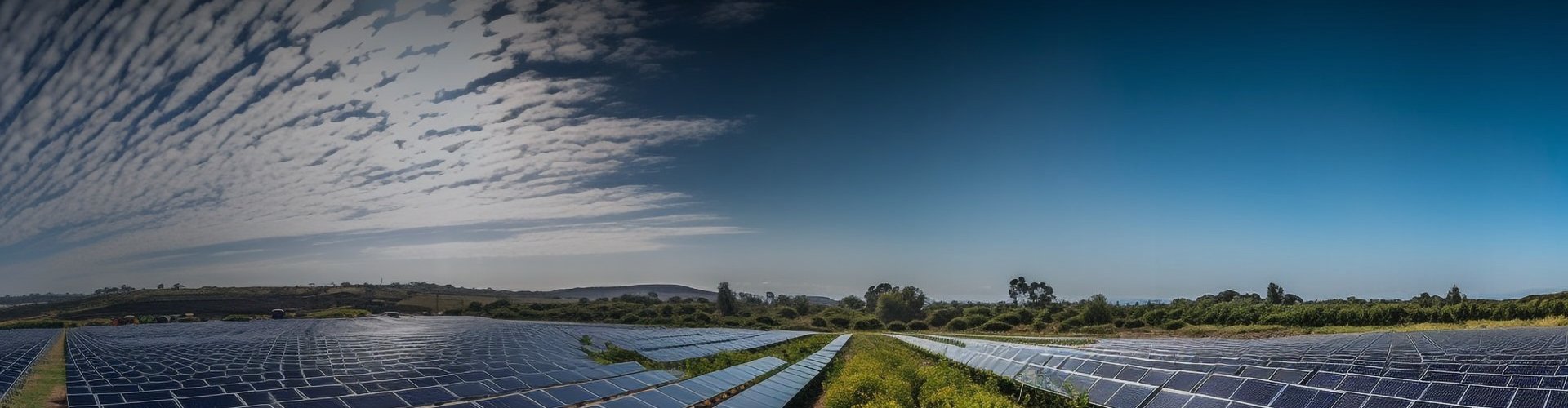

Intersolar 2023: Raptech is here!
The potential of renewable energy is vast. However, only a fraction of this potential is being used, and nearly 80 percent of the world’s energy needs are still generated from fossil fuels.
One thing is certain, however: Today, a 24/7 supply of renewable energy is technically and financially possible. This fact, together with the current political situation, is why the whole industry is undergoing a major change and growing dynamically.
According to the International Energy Agency (IEA), by 2027 photovoltaics alone will have replaced natural gas and coal as the main source of electricity.
With its four individual exhibitions – Intersolar Europe, ees Europe, Power2Drive Europe and EM-Power Europe – The smarter E Europe opened its doors for 3 days, from 14 to 16 June.
More than 2,450 exhibitors presented their latest products and solutions for the new energy world on Europe’s largest platform for the energy industry. More than 85,000 visitors from 160 countries attended.
Over three full exhibition days, The smarter E Europe truly provided the ideal opportunity to explore the latest trends, technologies and business models while meeting industry visionaries and decision makers.
Industry data
2022 will be remembered as the year in which solar uptake, driven by rising energy prices, supply chain stabilization and post-pandemic recovery programs, entered a new dimension of growth. In 2022, the world connected 239 GW of new solar capacity to the grid, setting yet another all-time record and recording an impressive annual growth rate of 45%, the highest since 2016.
As a result, global total installed solar capacity passed the Terawatt mark in early 2022 and stood at nearly 1.2 TW by the end of the year, a 25% increase from 2021 levels.
The expansion of solar is unmatched in other power generation technologies. Solar PV claimed two-thirds of all new renewable energy capacity installed last year and the highest growth rate in terms of electricity generation of any power generation technology (24%). At the same time, however, solar still meets only 4.5% of global electricity demand, while more than 70% is supplied by non-renewable sources.
In 2022, significant supply chain disruptions, lingering effects of COVID-19 and inflationary pressures, triggered by the war in Ukraine, caused the first increase in solar’s levelized cost of electricity (LCOE) in more than a decade. This, however, does not present a challenge to cost competitiveness; Solar PV remains significantly cheaper than new fossil fuels and nuclear, and product prices have already started to decline in recent months and are expected to return to pre-crisis levels soon.
The record installations in 2022 were led by a tremendous performance in China, the undisputed world-leading solar market, with nearly 100 GW added in just one year and a whopping 72% annual growth rate. The United States had a turbulent year in 2022, but maintained its position as the second largest market despite a 6% annual decline to 21.9 GW, while India’s recovery continued in 2022, with 17.4 GW of new installed capacity and a growth of 23%. Closing out the top 5 countries of 2022, Brazil doubled its installation rate with 10.9 GW, while Spain became the largest European market with 8.4 GW.
China’s dominance drove Asia-Pacific’s share to 60%, while Europe held steady at 19% and the Americas fell to 17%. In terms of installed solar capacity per capita, Australia remains in the lead with nearly 1.2 kW/capita, while the Netherlands has also passed the 1 kW/capita mark, against an estimated global average of 144 W/capita. you understand.
All solar analysts are confident that, after an outstanding 2022, there is no doubt that strong growth will continue into 2023 – the question is rather how much. The average scenario of Solar Power Europe’s “Global Market Outlook” research forecasts that 341 GW of new solar capacity will be installed worldwide in 2023, equal to a growth of 43% which essentially repeats the extraordinary performance of 2022. With conditions of market improved, however, installations could exceed 400 GW as early as 2023. Solar uptake is projected to continue over the next four years, with 401 GW added in 2024 and a market of 617 GW reached in 2027. This will bring operational capacity total exceeding 2 TW in early 2025 and 3.5 TW by the end of 2027.
The booming year of 2022 has produced a record number of widely “developed” solar markets. The number of GW-scale solar markets – countries installing at least 1 GW – rose from 17 in 2021 to 26 in 2022. Thus, 32 GW-scale markets are expected in 2023, 39 in 2024 and at least 53 in 2025.
The regional focus this year is on Southeast Asia. With the support of the Global Solar Council (GSC), Solar Power Europe’s research has provided in-depth analysis of the deployment of photovoltaics in the region, which holds significant solar potential. The regional market is projected to grow to 3.8 GW this year, a 13% increase from 2022, and expand to 13.3 GW by 2027 under an average scenario.
Over three full exhibition days, The smarter E Europe truly provided the ideal opportunity to explore the latest trends, technologies and business models while meeting industry visionaries and decision makers.