

How art can inspire concrete actions in the Energy Transition
The energy transition is a fundamental issue of our time. As global temperatures rise, it is essential to reduce greenhouse gas emissions and accelerate the adoption of renewable energy. In this context, art emerges as a powerful communication and awareness tool on the topic of climate change to promote the energy transition towards renewable and sustainable sources.
Through exhibitions, performances, workshops, artistic projects and interdisciplinary collaborations, it is possible to involve the public in an open and inclusive dialogue on the challenges and opportunities related to environmental sustainability, stimulating empathy, solidarity and collective responsibility.
Art not only educates but also inspires concrete actions, stimulating the public to reflect on their energy choices. As artist Olafur Eliasson said, “Art can make us aware of what we don’t yet know and, in the process, push us towards change.” This potential of art to communicate and mobilize is essential to address the climate crisis and promote an effective energy transition.
Art as a communication tool
Art can play an important role in communicating and disseminating the energy transition and climate change. Here are some ways in which art contributes to this process:
- Awareness and education: artworks can capture the public’s attention and raise awareness of environmental issues. Exhibitions, installations and performances can educate people about climate change issues and the importance of the energy transition;
- Powerful visual messages: visual art can convey complex messages in a simple and immediate way. Photographs, videos and installations can illustrate the impacts of climate change and possible solutions;
- Emotional engagement: artworks evoke feelings of empathy and personal connection with the issues addressed. When the audience identifies with the work, they are more likely to be influenced by the message. Installations that involve different senses (sight, hearing, touch, etc.) can create an immersive experience and leave a lasting impact. This can motivate people to take concrete actions to contribute to the energy transition;
- Interdisciplinary Collaborations: Artists can work with scientists, engineers, and activists to create works that combine creativity and technical knowledge. These collaborations can produce innovative and engaging solutions;
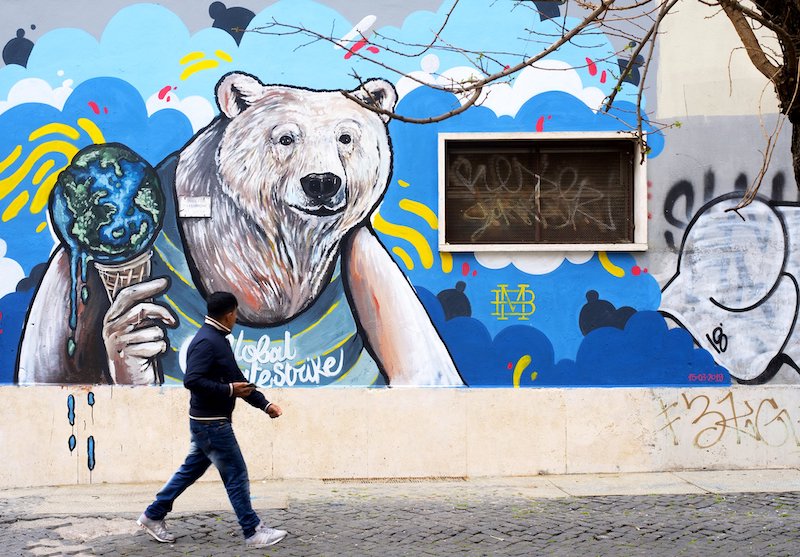
- Community Projects: Art can be used to engage local communities in energy transition projects. Public installations, murals, and participatory art projects can create a sense of ownership and ownership.
- Narrative and History: Art is a powerful tool for telling stories and narratives that can inspire change. Through visual and textual storytelling, art can tell stories of communities that have faced and overcome challenges related to climate change. These tales of resilience can inspire other communities to take similar action. An example of storytelling and history through art is Mel Chin’s “Before It’s Too Late” art project, which uses augmented reality to show how climate change could transform iconic landscapes around the world. Through visual and immersive narratives, the work invites audiences to reflect on the urgency of climate action.
In this context, art becomes a powerful and transformative means of communication and dissemination to promote environmental awareness.
Olafur Eliasson and The Weather Project
In 2003, Olafur Eliasson presented one of his most iconic works, The Weather Project, at the Tate Modern in London. This monumental installation transformed the Turbine Hall into an ethereal landscape, with an artificial sun emerging from a thin mist. Using 200 low-sodium mono-frequency lamps, Eliasson created an environment dominated by black and yellow tones. A semi-circular structure, suspended from a mirrored ceiling, completed the illusion, allowing visitors to reflect and feel part of the celestial landscape. The impact of The Weather Project was profound.
Eliasson did not intend to push a specific agenda, but rather to offer a space for personal reflection. “I wanted people to immerse themselves in a collective experience that connected them to the universe,” Eliasson explained. His work encouraged viewers to reevaluate their relationship with nature, stimulating a shared consciousness. This installation has indeed highlighted the interconnectedness between humanity and the natural world, influencing the public perception of climate change.
Through illusion and participation, Eliasson has created a powerful tool for raising awareness, capable of stimulating deep reflections on our place in the solar system and, ultimately, on our role in the global climate crisis.
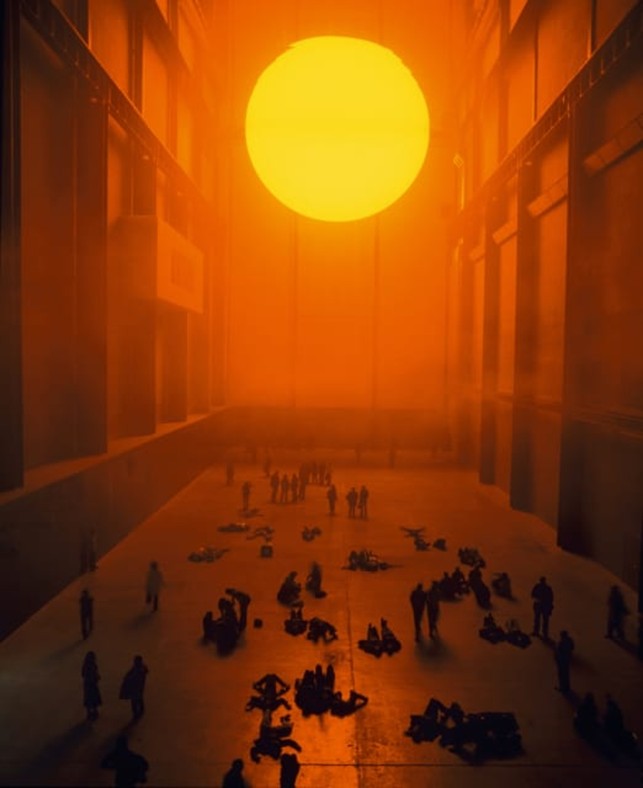
credits:
The weather project, 2003
Tate Modern, London – 2003
Photo: Tate Photography (Andrew Dunkley & Marcus Leith)
The Impact of Pietro Ruffo
Pietro Ruffo is an Italian artist known for his works that address complex issues such as climate change. His creations invite viewers to reflect on environmental and social issues through a distinctive artistic approach. Ruffo uses a combination of drawing, sculpture and installation to explore the relationship between humans and nature, often incorporating maps and symbols that emphasize global interconnectedness.
He has exhibited in numerous international galleries and museums, including the Palazzo Esposizioni in Rome, the Venice Biennale and the Museum of Contemporary Art in São Paulo.
One of his recent exhibitions, titled “L’ultimo fantastico minuto”, was presented at the Palazzo Esposizioni in Rome and explores the impact of humans on the Earth. “If we reduce the 13.8 billion years of the universe to a period of twelve months, dinosaurs appear around Christmas, while the first Homo sapiens arrive only a few minutes before the New Year’s Eve fireworks” (cit. Rebecca Wragg Sykes)
The work is a powerful artistic representation of the climate urgency. Through an intricate interweaving of maps, natural elements and symbolic figures, Ruffo captures the ephemeral beauty of our planet in the face of environmental crisis. The artist uses his refined style to evoke a world suspended between wonder and destruction, inviting the viewer to reflect on the inexorable passage of time and the impact of our actions on the Earth. A work that not only denounces, but also suggests the hope of possible change.
Ruffo’s unique approach lies in his symbolic use of geographical elements to convey powerful messages. His works do not simply represent the beauty of nature, but also raise critical questions about our future.

credits:
Pietro Ruffo. L’ultimo meraviglioso minuto | foto Giorgio Benni
Simone Tramonte and the Photography
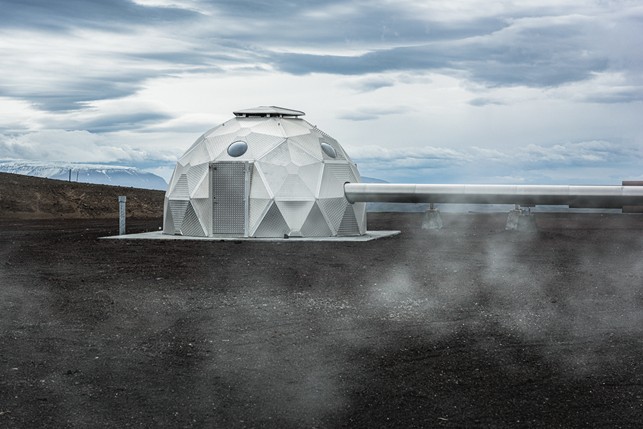
Simone Tramonte is an Italian photographer specializing in documenting contemporary social and environmental issues. After graduating in Economics, he decided to follow his passion for photography and since 2008, his work has focused on analyzing the relationship between people and the environment, with the aim of documenting how innovative technologies can shape these relationships towards a more sustainable future.
His long-term project “NET-ZERO TRANSITION” has received numerous awards, including the Sony World Photography Awards in 2021 and the World Press Photo in 2023. This work has been published in international magazines such as National Geographic, The Guardian, GEO, Der Spiegel, L’Espresso and Wired.
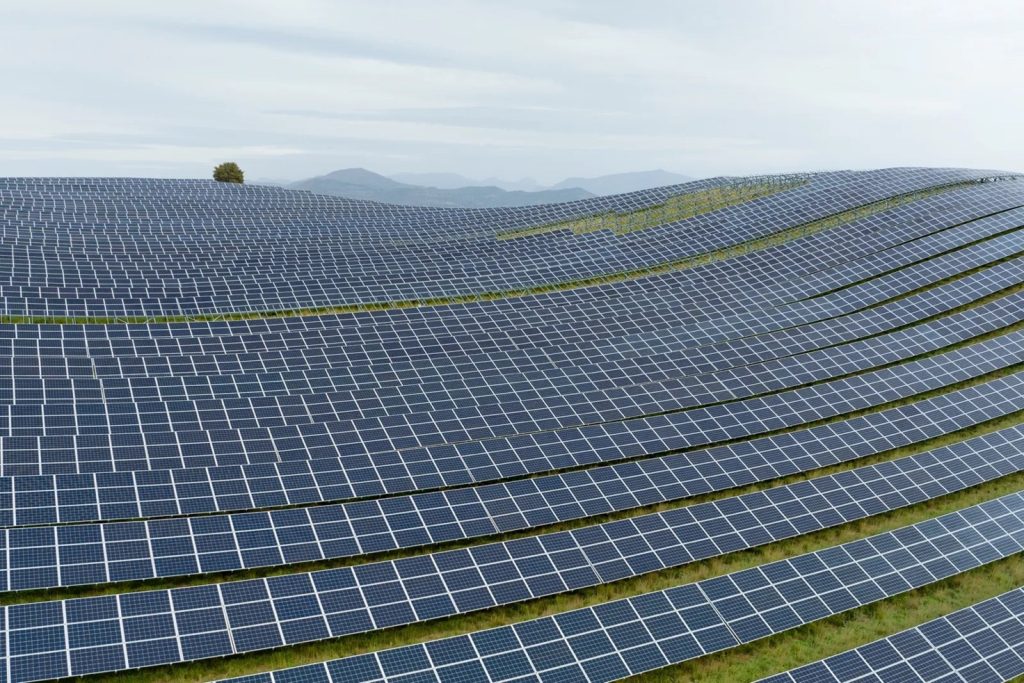
The project focuses on the innovative technologies needed to achieve a zero-emission economy. Tramonte captures the transformations in progress, making visible the challenges and solutions that accompany the energy transition. Tramonte’s photographs, like many other iconic images, have a powerful visual impact that manages to communicate the urgency of the climate crisis and bring complex issues to the center of public debate. In fact, a quote by Tramonte emphasizes: “Photography has the unique power to crystallize attention on a moment, making climate change impossible to ignore.”
Tramonte’s art documents reality and inspires deep reflection and calls to action. Through his work, the public is encouraged to consider their role in the fight against climate change, pushing towards concrete and sustainable solutions.
Promotion of Sustainable Policies
Art has always played an important role in influencing policy decisions, serving as a catalyst for critical conversations and social change. Through powerful images and provocative messages, artists challenge established norms and stimulate public debate, encouraging policymakers to consider new perspectives and solutions.
Successful collaborations between artists and governments demonstrate the potential of art as a tool for advocacy. A prime example is the ‘Art × Climate’ gallery, featured in the US National Climate Assessment, which highlights how art can raise awareness of climate issues and promote sustainable policies. This initiative featured 92 artists whose works represent the causes and impacts of climate change, involving government agencies such as the National Science Foundation and FEMA.
These collaborations highlight the importance of art in strengthening public understanding and motivating action towards responsible environmental policies. Through such partnerships, art continues to prove itself as a powerful ally in the fight against climate change.
Future challenges and opportunities
The main challenge in communicating climate change is to maintain the public’s attention in a world saturated with information. Additionally, art often has to translate complex scientific concepts into accessible visual symbols, a task that requires a balance between precision and creativity.
Another significant challenge is the lack of financial support for artistic projects that address climate, as they are often perceived as less of a priority than other environmental initiatives.
Fortunately, new opportunities for artists and activists are constantly emerging. Collaborations like the one between artists and the US Global Change Research Program demonstrate the potential for impact when art and science meet. Additionally, digital platforms offer a space to amplify the reach of artistic messages, allowing them to reach a broader and more diverse audience. These opportunities fuel hope that art can continue to be a powerful voice in the fight against climate change.