

How does photovoltaic energy work?
The data shows that solar energy is a promising sector: over the past 10 years, the global capacity of photovoltaic systems has increased more than 17 times. The advantages are obvious: clean energy with virtually zero greenhouse gas emissions, safety for humans and the environment, operational autonomy, independence from energy suppliers and savings.
The sun is an inexhaustible alternative energy source. Our planet receives more energy every hour than humanity uses in a year. But how to convert it? This is what photovoltaic systems are for.
How a solar panel works
Despite the external simplicity of the device, the principle of operation of such an electrical device is quite complicated. It is based on the photoelectric effect, which is obtained using photovoltaic cells. Solar panels collect the rays from our star. They fall on the photovoltaic layer. These cells are produced with two chemically modified layers of silicon. When photons from sunlight reach the surface, these electrons acquire the ability to move, creating a flow that produces an electric current.
Sunlight causes the release of electrons from the two layers. The electrons of the second layer occupy the space left free by the first layer. There is a constant movement of electrons, which leads to the natural formation of voltage on the external circuit. As a result, one of the photovoltaic layers acquires a negative charge, and the second becomes positive.
Next, the inverter converts the current from DC to AC.
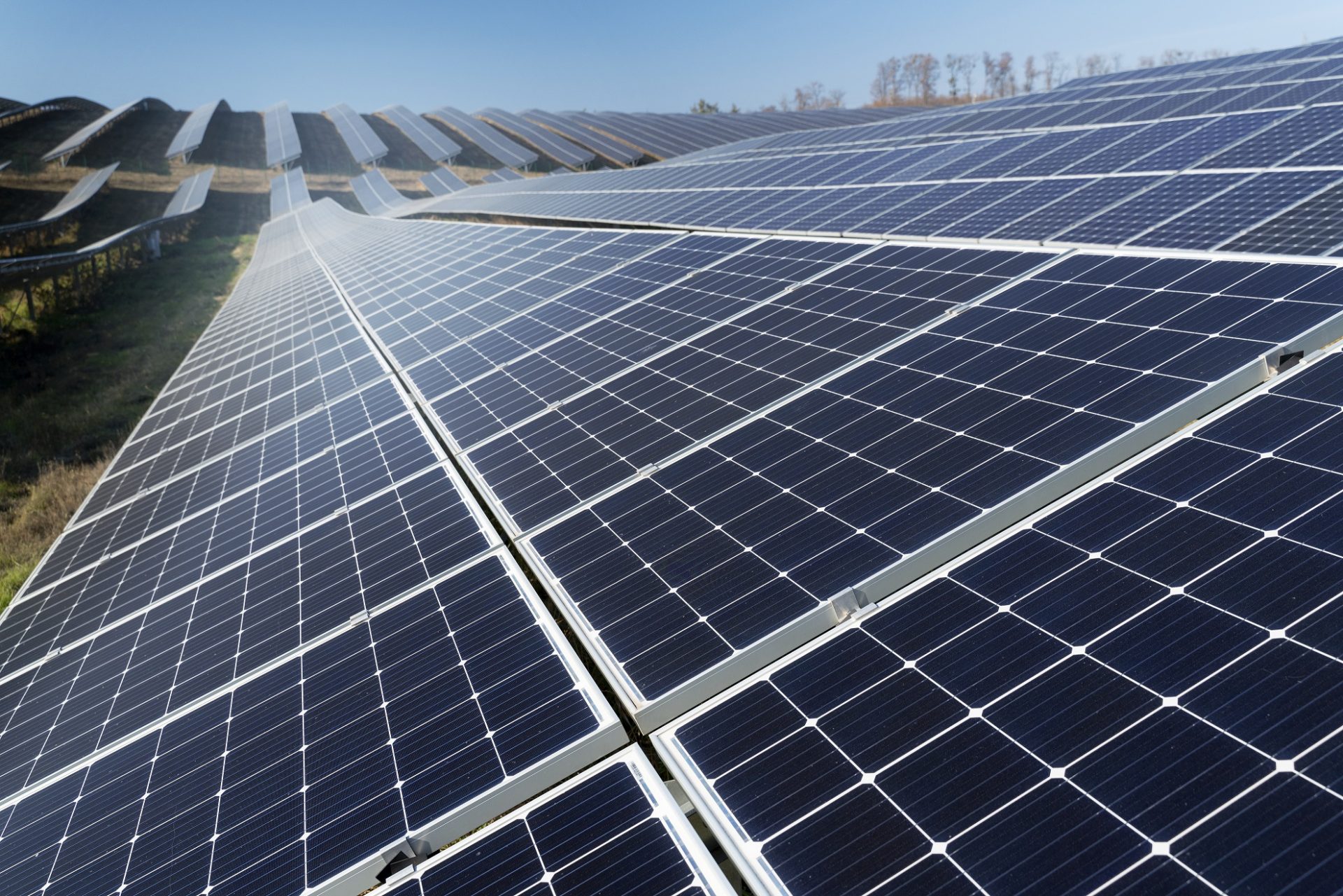
Each cell generates a small amount of energy and a panel is generally made up of 36-72 photovoltaic cells. By connecting several panels together, a photovoltaic system is created. Eight to ten panels are enough to power a small house. However, these statistics are obviously influenced by some factors such as the efficiency of the panels, the amount of sunlight in the region and the energy needs of the residence itself.
The process of converting sunlight into electricity begins in the so-called photovoltaic cell. It is important to note that photovoltaic solar panels generate electricity in the form of direct current, which means that the electricity must go through an inverter to convert it to alternating current, which is commonly used in buildings, appliances, sockets and light bulbs.
Solar panels connection
The efficiency and correct functioning of solar panels depend not only on their type, power, but also on the installation and connection. It is necessary to develop the correct scheme for connecting all elements of the power plant and correctly select the place for the installation of solar panels.
All panels must then be connected in parallel-series. This type of connection ensures maximum efficiency of the equipment.